
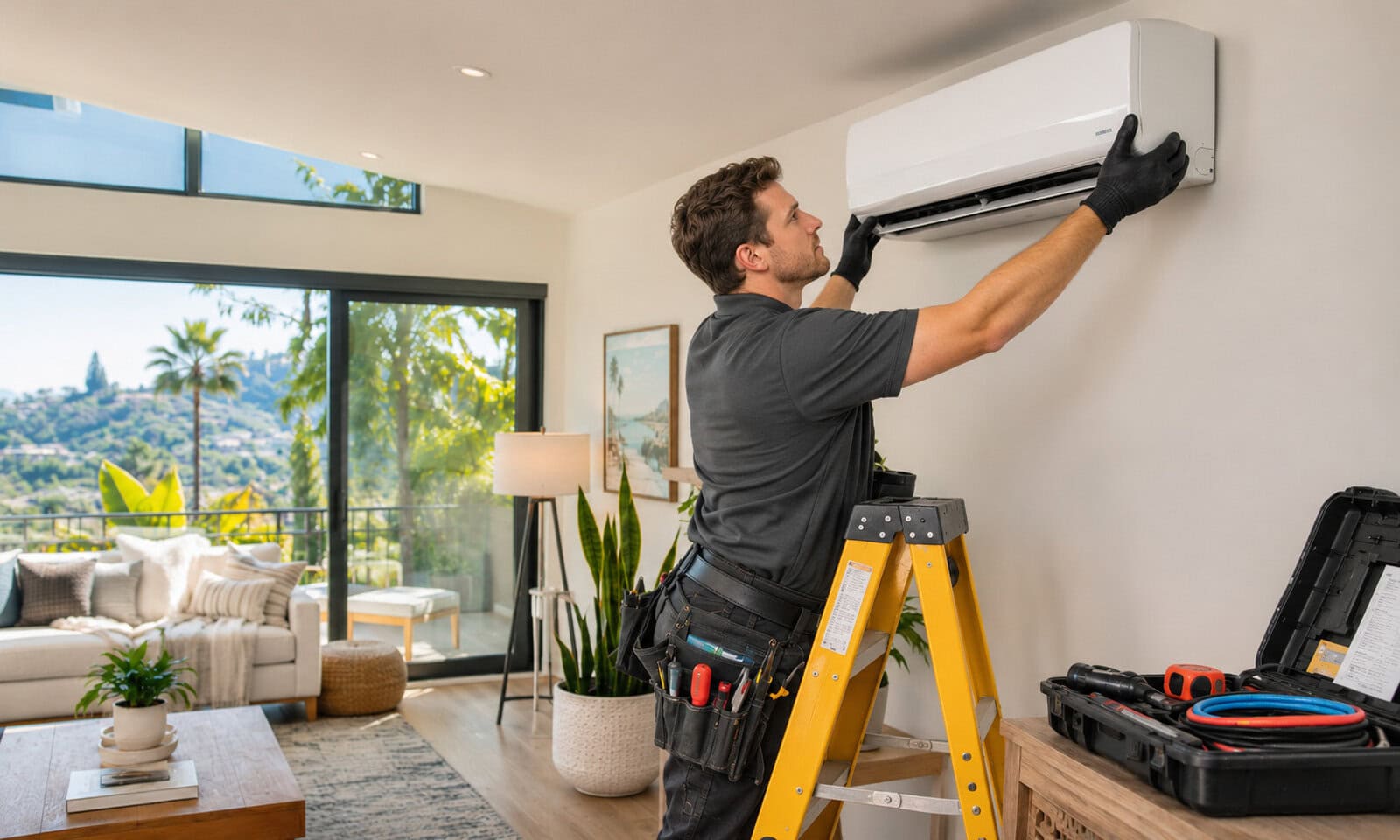
A homeowner in Fresno calls because the air conditioner quit. The furnace still runs, so the homeowner expects a simple replacement. Then they ask whether a heat pump could do both jobs. Before you quote a model, you need to know whether the existing ducts can move enough air and whether the electrical system can support the equipment. That is where the opportunity starts. The contractor who can answer those questions gives the homeowner something more useful than a price on a box.
Where California’s Energy Code Is Creating Work
California’s 2025 Energy Code generally applies to permit applications submitted on or after January 1, 2026. For new single–family homes, heat pumps are the prescriptive choice for space heating in every climate zone, but a design with gas heat can still use the performance compliance path if it meets the applicable energy budget.
That does not mean every furnace replacement requires a heat pump. Existing homes follow separate alteration rules, and some cities have additional requirements. Before you bid, check what the local building department requires for that address and scope of work. Even when a conversion is not required, a failed air conditioner or an aging furnace gives you a reason to discuss whether a heat pump makes sense for the home.
What to Check Before You Price a Conversion
Start with the house, not the old equipment label. A residential load calculation, such as Manual J, helps you estimate how much heating and cooling the house needs. Match those loads to the proposed unit’s output at local design temperatures, rather than relying on the tonnage on the label. If you plan to reuse the ducts, check whether the returns can move the required air. A new unit will not fix an undersized return.
Check electrical capacity before you promise the existing panel will work or assume it needs replacement. If the job needs a panel upgrade, coordinate that scope with a licensed C–10 electrical contractor. Before setting the schedule, check whether the job requires an independent Energy Code Compliance rater to verify items such as duct leakage or refrigerant charge. Allow time for any required verification before final inspection.
What to Learn While You Pursue Your C–20 License
The Contractors State License Board identifies C–20 as the classification for HVAC heat pump work. A pending application does not authorize you to bid work that requires a license, and the exemption for minor work under $1,000 does not apply when a permit is required or employee labor is used. While you work toward licensure, a job with a licensed HVAC contractor lets you see what happens between the estimate and the final inspection.
Unless you qualify for a waiver, expect to take both the Law and Business exam and the C–20 trade exam. In the trade exam guide effective April 1, 2026, fabrication, installation, and startup account for 38% of the exam. Planning and estimating account for 22%, troubleshooting, repair, and maintenance for 20%, and safety for 20%. Connect that study to what you see in the field. At startup, ask the lead technician which readings they record and what would make them stop and investigate.
The Habit That Carries Into Your First Jobs
The opportunity is not just installing more heat pumps. It is becoming the contractor who can explain when a conversion fits the house, what the job will involve, and how you will know the system is working as designed. Build that habit before you get licensed: verify what the house needs before you commit to a price, and verify how the system runs before you call the job finished.